Arroyo (watercourse)
Dry watercourse that flows after sufficient rain.

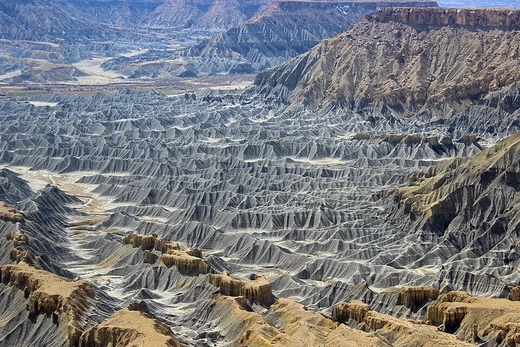
An arroyo (from the Spanish arroyo, meaning 'brook') or wash is a dry watercourse that temporarily or seasonally fills and flows after sufficient rain. Flash floods are common in arroyos following thunderstorms. The term usually applies to sloped or mountainous terrain in xeric and desert climates, and similar landforms are known by various names worldwide, such as wadi in North Africa and Western Asia, sai or sair in the Gobi, and nullah in India.
- type
- Landform
- also_known_as
- Wash, wadi, nullah, donga, fiumare, dry valley
- climate
- Xeric and desert climates
- key_feature
- Intermittent or ephemeral flow after rain
- associated_hazard
- Flash flooding
- biome
- Desert dry wash biome (southwestern United States)
Lore & Background
Natural arroyos are formed through a process known as arroyo-cutting, which occurs in arid regions such as New Mexico, where heavy rains can enlarge rivers cutting into surrounding rock, creating ravines that are dry under normal weather conditions. However, it is debated whether excessively stormy periods are the sole cause, as long-term climate changes and human factors like overgrazing by livestock and groundwater pumping also contribute to increased downcutting and erosion.
Reader's Guide
Arroyos are significant as both natural fluvial landforms and constructed flood control channels. In rural communities, they often serve as principal transportation routes, while in urban areas they function as parks and recreational locations with linear multi-use trails. Flash flooding can cause deep arroyos or sediment deposition, lowering the groundwater level and making land unsuitable for agriculture, though a lowered water table can reduce saline seeping and alkali deposits, enabling irrigated farming. The desert dry wash biome is restricted to arroyos of the southwestern United States, providing a water source for desert animals.
Did You Know?
- Flash floods can turn a dry arroyo into a roaring river in under two minutes, even with no local rain.
- The term 'arroyo' is akin to the Catalan 'rambla', which stems from the Arabic 'ramla' meaning 'sand'.
- Overgrazing by livestock throughout the 20th century has increased runoff and downcutting in arroyos.
Frequently Asked Questions
What is an arroyo (watercourse)?
An arroyo is a dry, channel-like landform that only carries water temporarily after heavy rainfall, then returns to a dry state. The word comes from Spanish, where it simply means 'brook.'
What are arroyos also known as around the world?
Depending on the region, the same feature goes by names like wadi (North Africa and Western Asia), sai or sair (the Gobi), nullah (India), and donga or fiumare in other areas. In English, 'wash' is the most common synonym.
Where do arroyos typically form and what climate do they need?
They are most common on sloped or mountainous terrain in xeric and desert climates, such as the southwestern United States. The defining requirement is a climate dry enough that the channel stays empty for most of the year.
What is the main hazard linked to arroyos?
Flash flooding is the key danger, since a brief thunderstorm can send a sudden, powerful surge of water through a channel that has been bone-dry for months. This makes arroyos especially treacherous in desert environments where people might underestimate the risk.
Why do geomorphologists care about arroyos?
They are a classic example of how intermittent flow shapes landscapes in arid regions, carving channels, transporting sediment, and building alluvial fans over time. The desert dry wash biome they create is a distinct ecological and geomorphic setting studied in its own right.
More in Coastal And Fluvial Geomorphology 1-24
Elsewhere in the Coastal And Fluvial Geomorphology universe
Spotted an error? Know more?
This is a living reference — every entry is fact-audited, and reader corrections feed straight into our audit queue. Suggest an edit · See this site's audit record