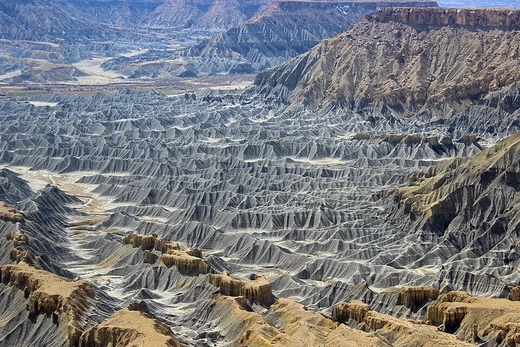
Avulsion (river)
River channel diversion process via bifurcation.

Avulsion (river) is the process in sedimentary geology and fluvial geomorphology by which flow is diverted out of an established river channel into a new course via a bifurcation. Avulsions range from full, where all flow is diverted, to partial, where only a portion of flow is diverted. They are common in river deltas and can also occur through erosion or meander cutoffs, typically during large floods.
- field
- Sedimentary geology, fluvial geomorphology
- known_for
- Process of river channel diversion via bifurcation
- types
- Full avulsion, partial avulsion, erosional avulsion, meander cutoff
- occurrence
- Common in river deltas and during large floods
- factors
- Channel slope, upstream planform, cross-sectional geometry, obstructions (e.g., wood, beaver dams)
Lore & Background
Avulsions were once thought to occur solely due to a slope advantage, where a river could take a steeper, more direct course. However, it is now recognized that many factors influence avulsions, including upstream channel planform, channel cross-sectional geometry at a bifurcation, and channel obstructions such as wood or beaver dams. In deltaic and net-depositional settings, avulsions are common as sediment deposition reduces channel slope, making the river unstable and prone to breaching its levees during floods to find a steeper path to the ocean. This process, also known as delta switching, builds new deltaic lobes while abandoned lobes subside.
Reader's Guide
Avulsion is a key process in the evolution of river deltas and floodplains, shaping distributary networks and leaving a geologic record in sedimentary basins. In deltas, avulsion occurs when channel bed aggradation superelevates the channel above the floodplain by about one channel-depth, providing enough hydraulic head for a breach to result in avulsion. Meander cutoffs are minor avulsions that occur when the ratio of channel slope to potential slope is less than about 1/5. Avulsions typically proceed downstream to upstream via head cutting erosion and can be triggered by floods or dam removal.
Did You Know?
- Avulsions range from full, where all flow is diverted, to partial, where only a portion of flow is diverted.
- On average, an avulsion will occur every time the bed of a river channel aggrades enough that the river channel is superelevated above the floodplain by one channel-depth.
Frequently Asked Questions
What is river avulsion in geomorphology?
River avulsion is the event where a watercourse abandons its existing channel and carves a new path through a bifurcation point. It is a core process studied within sedimentary geology and fluvial geomorphology.
What are the different types of river avulsion?
Geomorphologists distinguish between full avulsions (the entire flow shifts to the new channel) and partial avulsions (only a fraction of the flow diverts). Erosional avulsions and meander cutoffs represent additional mechanisms by which a river can redirect itself.
Where do river avulsions most frequently occur?
River deltas are the classic setting for avulsion events because of their low-gradient, sediment-rich environments. Large flood events also trigger avulsions in other river systems when water overtops banks or breaches natural levees.
What factors determine whether a river will avulse?
Key controls include the channel's longitudinal slope, the upstream planform geometry, and the cross-sectional shape of the channel. Physical obstructions such as fallen timber or beaver dams can also build up enough head to force flow into a new path.
How does a river avulsion differ from a simple meander cutoff?
A meander cutoff is one specific mechanism that can produce an avulsion, but the broader term covers any diversion of flow out of the established channel via a bifurcation. So every meander cutoff counts as an avulsion event, yet not every avulsion involves a meander loop being cut off.
More in Coastal And Fluvial Geomorphology 1-24
Elsewhere in the Coastal And Fluvial Geomorphology universe
Spotted an error? Know more?
This is a living reference — every entry is fact-audited, and reader corrections feed straight into our audit queue. Suggest an edit · See this site's audit record